Nuremberg's Two Bunker Tours: the WWII Art Bunker and the Nuclear Bunker at the Main Station
4 min read
If you can only fit in one bunker, make it the Historischer Kunstbunker tour at €12 per person. It runs in English and German, lasts an hour and explains how Nuremberg’s most valuable art got through the war. The nuclear bunker tour at €13 per person is a different story (the Cold War) and is led in German only.
Side by side
| Tour | Where | Length | From | Guide language |
|---|---|---|---|---|
| Historischer Kunstbunker | Obere Schmiedgasse 52, below the castle | 1 hour | €12 per person | English, German |
| Nuclear bunker | Main station, Bahnhofplatz 9 | 75 minutes | €13 per person | German |
Both are run by the Förderverein Nürnberger Felsengänge e.V., both take groups of up to 20, and both go ahead in rain or shine.
The Art Bunker
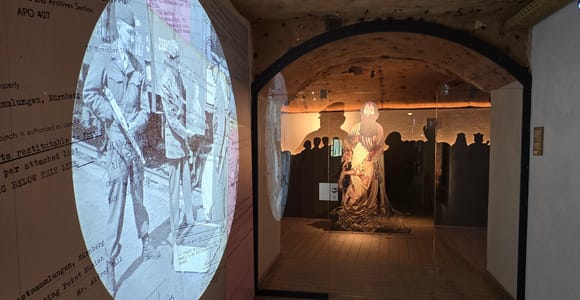
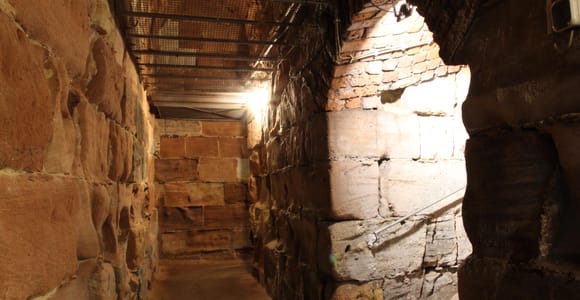
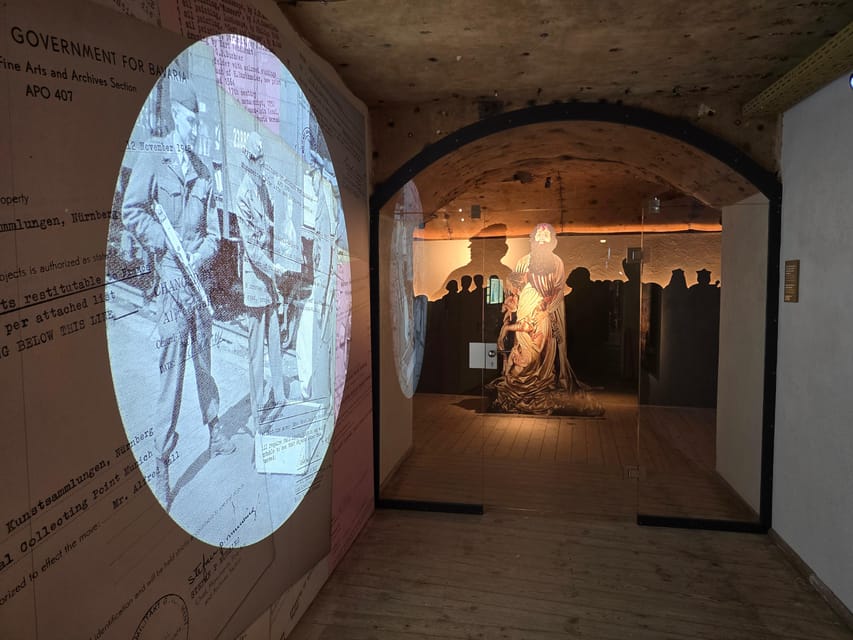
The tour moves through a tunnel complex under the castle in the Old Town. The cellar was used to store beer in the Middle Ages; during the Second World War it became a shelter for the city’s art. According to the listing, the stored objects included the altarpiece by Veit Stoss, the automaton clock from the Frauenkirche, the Codex Manesse and works by Albrecht Dürer. The guide also explains how the bombing destroyed about 90 percent of the medieval Old Town and how it was rebuilt afterwards.
Practical points from the booking page: the museum entry fee and the guide are included; transport and food and drinks are not. The listing recommends warm clothing, and says it is not suitable for people with mobility impairments, claustrophobia or wheelchair users. The listing marks it as likely to sell out, so book ahead. Starting times are shown when you check availability.
Of the two, this is the one with an English-language guide.
The Nuclear Bunker
After the atomic bombs on Japan, civil defence became a theme of the Cold War, and the bunker under Nuremberg Central Station is one result. The listing says it was meant to shelter some of the city’s inhabitants and above all travellers, and was designed against biological and chemical attack as well. About 2,500 people were planned to stay for two weeks, each with half a square metre of space. You will see the installations and exhibits, a computer simulation of the growth of nuclear arsenals, and you can sit or lie on a pallet to get a sense of the crowding.
Rules from the listing:
- It is listed as not suitable for children under 8, people with mobility impairments, claustrophobia or wheelchair users.
- No luggage or large bags, no food or drink, no selfie sticks, and no touching of exhibits.
- There is no entry after the tour has started, so arrive early.
- The listing says the detailed description and meeting point are on the operator’s own homepage; the booking page gives the main station as the meeting point.
The guide speaks German. If your German is not good enough to follow 75 minutes, choose the Art Bunker instead.
Which one for you
Take the Art Bunker if you want an English-language tour and a story about Nuremberg itself. Take the nuclear bunker if you read German, like Cold War history and have an hour and a quarter before a train. Both listings call themselves unsuitable for wheelchair users and people with claustrophobia or mobility impairments, so read that list on the booking pages before you pay.